Annotated Bibliography and Reflection
- Joy Mistovich
- Apr 12, 2023
- 7 min read

Updated: May 25, 2024
Throughout my research, several key themes are evident including Art Appreciation, visitor learning experiences within museums and a docent’s role, as well as blind and sighted visitors within the museum. How does the multisensory approach combining technology, as well as museum programs include a wide array of individuals with and without disabilities? How does critical thinking, engagement, art making, and becoming a casual visitor impact the museum experience? What are the similarities and differences?
Andre, L., Durksen, T., & Volman, M. L. (2016). Museums as avenues of learning for children: A decade of research. Learning Environments Research, 20(1), 47–76. https://doi.org/10.1007/s10984-016-9222-9
This research provides the key components of children’s’ education throughout a wide variety of museums, galleries, science centers, and natural history museums. Unlike previous studies conducted, few exist that offer an educational framework specifically for elementary and preschool students. A larger collection of studies is available surrounding high school education. The three authors support their work by providing these details and hearkening back to a prior work from the 1990s based on children and museum docents that were the most complete at the time. Referring back to these past and present studies along with explanations of docents and their key roles within children’s education in the museum setting makes this research credible. Since my research contains a variety of docent interviews and museum programs concerning docents and children, it was necessary for me to fund a journal article that offered this scope and depth.
Hayhoe, S. (2013, March 26). Expanding our vision of museum education and perception: An analysis of three case studies of Independent Blind Arts Learners. Allen Press. Retrieved April 6, 2023, from https://meridian.allenpress.com/her/article/83/1/67/32303/Expanding-Our-Vision-of-Museum-Education-and
Hayhoe’s work details several case studies of blind persons of various ages and abilities through the Art Appreciation lens. All of his interviewees are familiar with the visual arts, and each of them enjoy the museum experience, as well as creating their own art. Throughout his research, he weaves a narrative, qualitative research perspective combining their own stories, outset of blindness, eye condition, and what makes the visual arts most appealing to them. Prior to Hayhoe’s work, few studies existed that offered a glimpse into techniques and methods to more effectively aid the blind community in Art Appreciation. Though his literature review isn’t as far-reaching in comparison to other studies of this type, it is still a credible source due to the heavy focus of his work; studies that pave the way for future researchers. This work allows me to expand my knowledge concerning how blind people require different means and techniques to explore the Art museum and various Visual Art mediums.
Kleege, G. (2018, January 10). More than meets the eye: What blindness brings to art. Amazon. Retrieved April 6, 2023, from https://www.amazon.com/More-than-Meets-Eye-Blindness/dp/0190604360
Kleege’s work is groundbreaking in more ways than one due to her unique perspectives surrounding blindness and Art Education. She also happens to be a member of the National Federation of the Blind, which is the largest organization of blind persons in the world. In the first sections of her work, she offers a view into the various lenses surrounding blindness through philosophies, her own museum experiences, as well as traditional museum programs and technologies pertaining to the blind community. Some of these include tactile, docent-led tours, audio descriptions, a chapter devoted to Braille and how this medium has been incorporated into artistic perspectives, as well as a foray into blind artists themselves. She bases her research on qualitative, constructivist, interview research, as well as her own experiences, as stated previously. However, she separates blindness into two distinct categories: totally blind and those with low vision. However, the NFB considers blind people, regardless of visual acuity, to still be blind. She argues, though, that persons who are totally blind from birth may not gauge the full understanding of the visual arts, since they never received any visual experiences. She doesn’t openly state that this is impossible when it comes to both creating and appreciating Art, but there is a key difference. Kleege’s book offered me a distinct perspective not only for this current project, but also, as a museum professional, I came away with a considerable amount of knowledge on the topic. I found it fascinating how she described the various differences between docent tours, audio description, and the need to offer objective opinions of artwork.
Reidmiller, L. L. (2003). Art for the visually impaired and blind: A case study of one artist’s solution (dissertation). Ohio State University, Columbus, Ohio.
Reidmiller’s dissertation focuses on the historical aspects of blindness within schools for the blind, as well as the public school setting. However, her primary focus is based on several blind students experiences at the Ohio State School for the Blind, along with a sighted art teacher, sighted artist, and the school administrator. She goes into great detail regarding previous studies conducted by well known art educators including Viktor Lowenfeld concerning teaching the visual arts to blind students. Reidmiller’s work is cohesive and relevant, since she uses a combination of interviews, qualitative research practices, art making, and constructivist methodology. This dissertation formed the foundation for my initial decision to continue with my research project, since prior to reading, I was unaware that well-known art educators were teaching blind students in the early 20th century.
Schero, J. E. (2021, May 13). Art Museum Docent Coordinators’ perceptions: A difficult kind of balancing act. VCU Scholars Compass. Retrieved April 6, 2023, from https://scholarscompass.vcu.edu/etd/6651/
In Schero’s work, she describes how docent coordinators play a key role in Museum Education when it comes to docent training. In the first section of her research, she provides an outline of the various philosophies of Museum Education over the past centuries and points out the roadmap demonstrating the lack of diversity, equity, inclusion, and accessibility in the early 1970s to the 21st century where barriers are continually removed. Along the way, she clarifies and provides theories, along with explanations of them to make readers aware of the jargon surrounding Museum Education and docent training. Schero’s study offers a combination of prior research that paved the way for the Museum Education field including the American Alliance of Museums, as well as the Journal of Museum Education, etc. She thoroughly supports and supplements her own musings with statements that provide credibility to her claims by constructing a narrative of detail. This article provides effective material for me to add to my own research, since a large portion of my observations and interviews are heavily focused on the museum experience for docents and visitors alike. Prior to reading this study, I was unaware of the complex history, teaching and engagement surrounding the Museum Education field. Through reading this study, I was able to gain a greater understanding of this topic.
My two courses included: Research, Art Education and Overview Research in Art Education. In the Research and Art Education course, it supplemented my learning for the latter course through blog posts and check in quizzes. The most significant aspect of the research course involved a blog post called The Hmm Collection. Prior to writing the post and taking photos for the assignment, I was unsure of what to expect. However, by the end of the assignment, I had learned more about myself than I discovered previously. For instance, I realized that through combining creativity, academic research, photography, and various interests in art education, I can create a variety of new approaches and research methods. In the second course overview, Art Education Research, the primary focus involved learning the qualitative and quantitate research methods, ontologies, and epistemologies that would later enhance my course learning objectives. Through a foray into these numerous research practices, I came to discover myself as a constructivist, qualitative researcher. Later in the course, we conducted a group research project involving a specific research method. Finally, the most significant portion of the course itself pertained to a research project involving all of the traditional elements of an APA research paper. Through my research and current project, I have realized that I can take my experiences from the museum field, along with academic and creative practices and connect these various phenomena into future research projects that benefit the Butler. I will continue to learn and foster my creativity through examining current programs, learning about new programs, and deciding how to implement new trends and techniques.
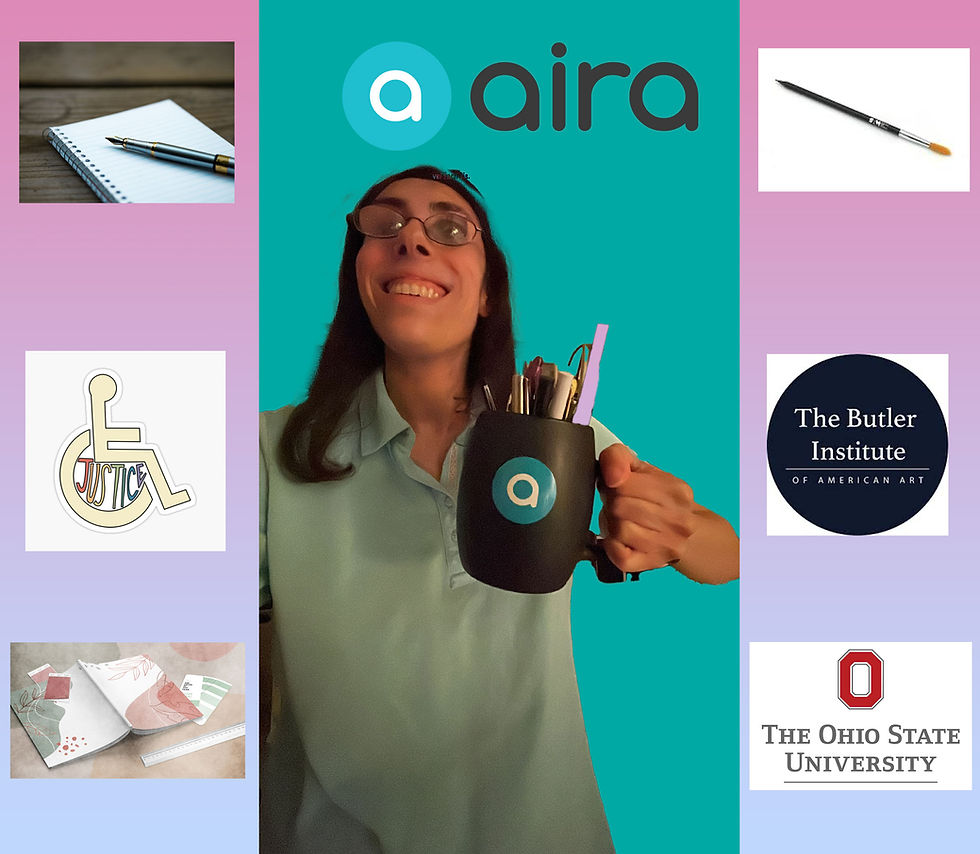
For me, there were three new experiences that I encountered throughout this course. Prior to my enrollment in this Master’s program, I was unfamiliar with the task of conducting observations, writing a literature review, as well as an annotated bibliography. However, I was ready for the challenges that would await me. Prior to my research observation experience, I was uncertain of how to tackle this challenge, since I knew I had to implement visual and auditory channels simultaneously. I initially thought my blindness would prove a hinderance when it came to successfully completing the assignment, but I knew I wanted to do well and gain as many new experiences as possible. Therefore, I ventured outside of my comfort zone and decided to use Aira’s technology service to assist with the observation process. This entire experience in general proved to be unforgettable and extremely successful, since I came to comprehend the possibilities of research and creativity are unending. There is no limit to what is possible concerning the academic, creative, and technological aspects within society. My literature review and annotated bibliography involved continuous research, ingenuity, and creativity, and again, I stretched the possibilities of technology, academic writing, and reflection to an entirely new level. Aira’s technology is not only useful for traditional aspects, such as navigation, reading, and shopping, but also extremely complex tasks as well. Through these experiences, I spent hours crafting these assignments, and as I went along, I needed to make sure the spacing, font, and numerous other visual aspects including APA formatting were accurate and concise. Since I have now completed these assignments, I am ready for the summer semester to discover what new challenges will await me.
As I mentioned previously, the observation process was an unforgettable moment for me, and through this, I came to further understand the Young Friends Adventure and Family Day programs more effectively. This includes but is not limited to: how docents engage preschoolers and families, some key questions they ask in order for children to more effectively engage with a work of art, and interaction in a museum setting. Learning about these two programs made me wish to dive into a more thorough understanding of the museum education process in general. The dissertation, which I read a portion of more recently, was extremely engaging and informative. I will continue to read more about these museum learning processes in order for me to more effectively use my role as a museum educator to benefit a wide array of individuals.

Comments